US Dollars


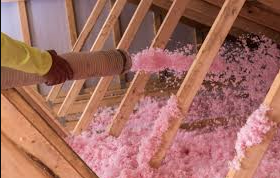

Attic Insulation
• Our quality contractors will weatherize your attic to reduce your heating and cooling bills.
• Air sealing to stop air leaks that impact your bills and comfort.

Your Instant Savings
$500 Manufacturer & Community Rebates

Low energy Bills

Improved Comfort

Professional Installation
Customer Reviews
"Great product, great process."
I’m 24 and don’t know the first thing about insulation, just that my new (to me!) house was very drafty. My dad lives out of state and didn’t really know how to help either, but then I saw an ad on Instagram about this website. Community Energy helped me find a solution that would work in my older home, coordinated various incentives to bring the cost down and even found me a contractor to install it! I’ve told all my friends at brunch. And I’m a little embarrassed that insulation has made me this happy.
"Should pay for itself."
This was easy and relatively quick for the contractor to install. He did it while I was in my home office and I barely even noticed he was there. After adding it to my attic, the temperature in my home was much more even. Things are busy at work and I’m glad I didn’t have to find someone to install it – it was a great price, too.
"Why did I install this myself?"
This project wasn’t hard to do on my own, but it also really wasn’t worth my time. The house is much more comfortable, though. Definitely got rid of the hot and cold spots I used to have. Wish I’d used Community Energy’s installation process as part of the project – ended up wasting a weekend scrunched up in the hot attic, getting itchy, when I could have been hiking with my dog in the sunshine. My mistake.
How Insulation Works
To understand how insulation works it helps to understand heat flow, which involves three basic mechanisms -- conduction, convection, and radiation. Conduction is the way heat moves through materials, such as when a spoon placed in a hot cup of coffee conducts heat through its handle to your hand. Convection is the way heat circulates through liquids and gases, and is why lighter, warmer air rises, and cooler, denser air sinks in your home. Radiant heat travels in a straight line and heats anything solid in its path that absorbs its energy.
Most common insulation materials work by slowing conductive heat flow and convective heat flow. Radiant barriers and reflective insulation systems work by reducing radiant heat gain. To be effective, the reflective surface must be in contact with an air space.
Regardless of the mechanism, heat flows from warmer to cooler areas until there is no longer a temperature difference. In your home, this means that in winter, heat flows directly from all heated living spaces to adjacent unheated attics, garages, basements, and especially to the outdoors. Heat flow can also move indirectly through interior ceilings, walls, and floors--wherever there is a difference in temperature. During the cooling season, heat flows from the outdoors to the interior of a house.
To maintain comfort, the heat lost in the winter must be replaced by your heating system and the heat gained in the summer must be removed by your cooling system. Properly insulating your home will decrease this heat flow by providing an effective resistance to the flow of heat.
R-Values
An insulating material’s resistance to conductive heat flow is measured or rated in terms of its thermal resistance or R-value -- the higher the R-value, the greater the insulating effectiveness. The R-value depends on the type of insulation, its thickness, and its density. The R-value of most insulations also depends on temperature, aging, and moisture accumulation. When calculating the R-value of a multilayered installation, add the R-values of the individual layers.
Installing more insulation in your home increases the R-value and the resistance to heat flow. In general, increased insulation thickness will proportionally increase the R-value. However, as the installed thickness increases for loose-fill insulation, the settled density of the product increases due to compression of the insulation under its own weight. Because of this compression, loose-fill insulation R-value does not change proportionately with thickness. To determine how much insulation you need for your climate, consult a local insulation contractor.
The effectiveness of an insulation material’s resistance to heat flow also depends on how and where the insulation is installed. For example, insulation that is compressed will not provide its full rated R-value. The overall R-value of a wall or ceiling will be somewhat different from the R-value of the insulation itself because heat flows more readily through studs, joists, and other building materials, in a phenomenon known as thermal bridging. In addition, insulation that fills building cavities reduces airflow or leakage and saves energy.
Unlike traditional insulation materials, radiant barriers are highly reflective materials that re-emit radiant heat rather than absorbing it, reducing cooling loads. As such, a radiant barrier has no inherent R-value.
Although it is possible to calculate an R-value for a specific radiant barrier or reflective insulation installation, the effectiveness of these systems lies in their ability to reduce heat gain by reflecting heat away from the living space.
The amount of insulation or R-value you'll need depends on your climate, type of heating and cooling system, and the part of the house you plan to insulate. To learn more, see our information on adding insulation to an existing house or insulating a new house. Also, remember that air sealing and moisture control are important to home energy efficiency, health, and comfort.
Use the following map to determine your climate zone and then the following tables to estimate the required R-values. See the 2021 International Energy Conservation Code for more information on climate zones.
Attic Insulation
Related Products